
Walking Side by Side: A Different Way to Experience Therapy
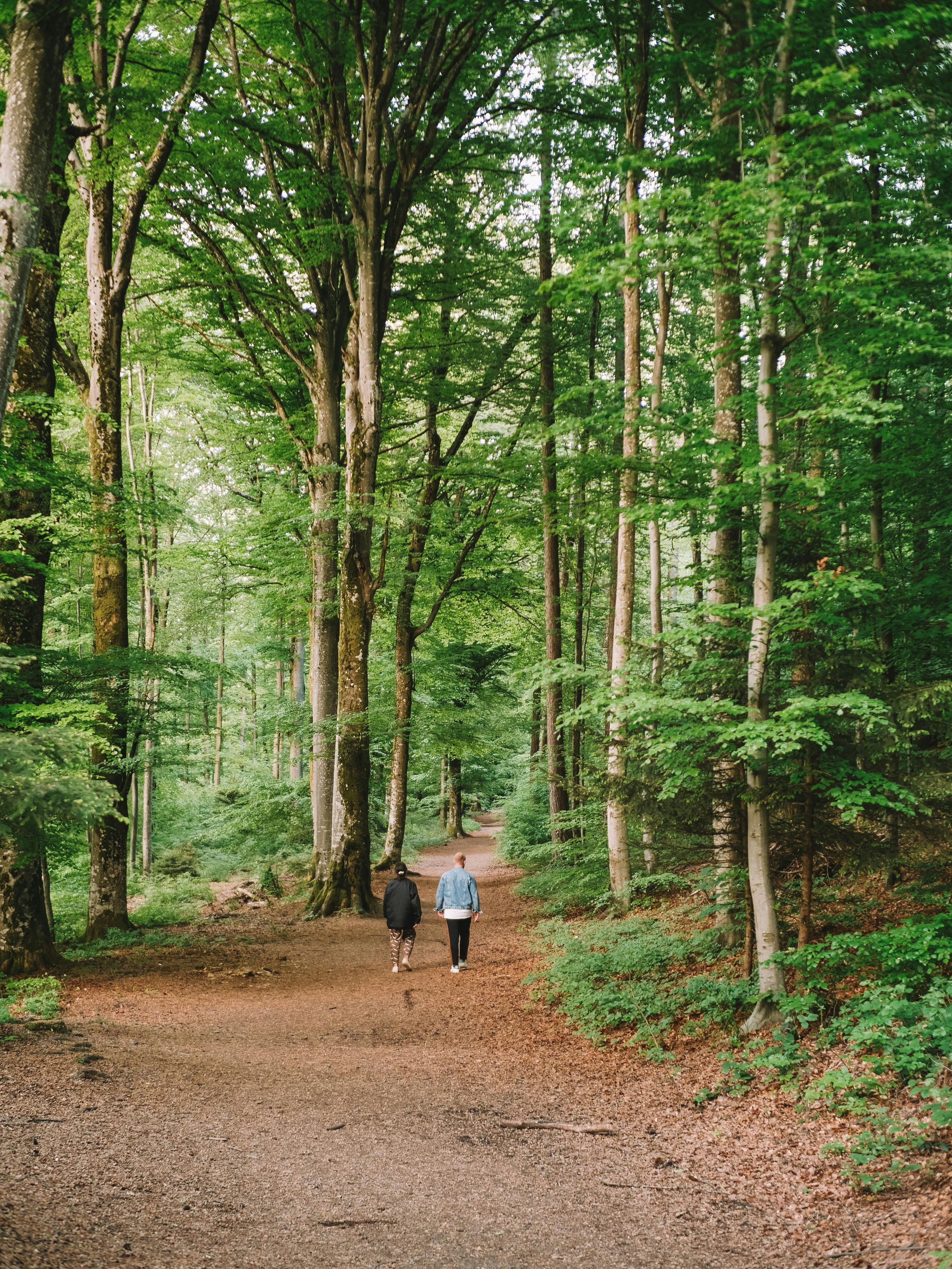
Walk & Talk counselling offers an alternative to traditional office-based therapy, one that takes place outdoors, while walking side by side, rather than sitting face-to-face. For some people, this format creates a more natural, and less formal space to explore what they’re working on.
Sessions may take place on sidewalks, trails, or in local parks, and we move at a pace that feels comfortable for you. This flexibility allows us to shape the session around your needs, while still supporting the same therapeutic depth and intention.
Many clients find that being in motion and spending time outdoors can support a sense of ease in the body and mind. Walking can help regulate the nervous system, making it easier to reflect, process, and connect with thoughts and emotions. The side-by-side nature of walking can also feel less intense than sitting across from someone, which can create more space for openness and self-expression.
Support for anxiety, depression, and post-traumatic stress
Walk & Talk therapy may support concerns such as anxiety, depression, and post-traumatic stress, while also supporting increased self-awareness, self-acceptance, and a greater sense of connection, to yourself, to others, and to the natural environment. At the same time, these experiences are individual, and the benefits will look different for each person.
This format can be especially helpful for those who feel more at ease when moving, thinking out loud, or engaging with their surroundings. It can also offer a meaningful way to integrate mind and body, particularly when traditional therapy spaces feel too contained or structured.
Special Considerations
At the same time, Walk & Talk counselling involves some important considerations. Because we are meeting in public spaces, confidentiality cannot be fully guaranteed. While I take care to protect your privacy, others may be nearby or overhear parts of our conversation. We will talk through these factors together so you can decide whether this format feels like a good fit for you.
There are also physical and environmental considerations to keep in mind, including weather, terrain, and potential risks such as slips, trips, or exposure to the elements. You are encouraged to wear appropriate clothing and footwear, and to communicate with me at any time if you need to adjust the pace, take a break, or pause the session. Your comfort and safety are always a priority, and we can shift to a seated conversation whenever needed.
Walk & Talk counselling is not a one-size-fits-all approach. It may not be suitable for everyone or for every stage of therapy. Part of our work together is regularly checking in about how the format is feeling and whether it continues to support your needs. You are always encouraged to share feedback, and we can adjust the structure, pace, or setting of our sessions as needed.
If at any point this approach no longer feels supportive, we can explore alternative options, including in-office or virtual sessions. Therapy is most effective when it feels aligned, collaborative, and responsive to where you are at.
If you live in Greater Vancouver, BC, and you’re curious about Walk & Talk counselling, I encourage you to reach out. You’re invited to connect, ask questions, or book a free consultation to explore whether this format might be a good fit for you.
Sometimes the best way to understand a different kind of therapy is to experience it. And sometimes, that begins with a walk.
References:
Capaldi, C. A., Dopko, R. L., & Zelenski, J. M. (2015). The relationship between nature connectedness and happiness: A meta-analysis. International Journal of Wellbeing, 5(4), 1–15.
Cooley, S. J., Jones, C. R., Kurtz, A., & Robertson, N. (2020). ‘Into the wild’: A meta-synthesis of talking therapy in natural outdoor spaces. Clinical Psychology Review, 77.
Coventry, P. A., et al. (2021). Nature-based outdoor activities for mental and physical health: Systematic review and meta-analysis. SSM - Population Health, 16.
Dickmeyer, A., et al. (2025). Walking therapy: Feasibility and clinical outcomes. Clinical Psychology & Psychotherapy, 32(1).
Koziel, N., et al. (2021). Outdoor and movement-based psychotherapy: A review of clinical applications. The Canadian Journal of Psychiatry, 67(2).
Monroy, M., & Keltner, D. (2022). Awe as a pathway to mental and physical health. Perspectives on Psychological Science, 18(2).
Prince-Llewellyn, H., & McCarthy, P. (2025). Client experiences of walk-and-talk counselling: A qualitative study. Counselling & Psychotherapy Research, 25(2).
Yao, W., et al. (2021). The effects of exposure to natural environments on stress and health outcomes. Urban Forestry & Urban Greening, 57.